Tag: hypnotherapy

  • How Does Hypnotherapy Actually Work?

    How Does Hypnotherapy Actually Work?

    Working as a hypnotherapist, I help clients go into trance every working day. One of the questions I get asked is, “How does hypnotherapy actually work?”

    What is Trance?

    The first thing to examine is trance. I usually help people into trance by relaxing them (and they do get very relaxed!) and then asking them to imagine something. Once the brain and the body are very relaxed, something strange happens in the brain – the brain finds time to deal with unresolved issues. The part of the brain known as the default mode network comes into play.

    It is the same process when you daydream, or when you get engrossed in a film or a book. Maybe you are totally absorbed in a film, and you become unaware of everything that is going on around you. You loose track of time. You become totally drawn in. This is trance.

    What is Hypnosis?

    Now we understand trance, it is time to look at hypnosis. Hypnosis is simply to act of helping someone else go into trance. You can also self-hypnotise, where you deliberately go into a trance yourself. There are various techniques for doing this, the most popular one is getting the person into a comfortable position (usually lying down or sitting) and helping them to imagine something, simply by talking to them.

    What is Hypnotherapy?

    Hypnotherapy is simply the use of hypnosis to help someone change. Many of us have things about ourselves that we would be better off changing – too anxious or depressed, addicted to something, unhealthy obsessions, lack of confidence, worry about how we look, righteous anger that interferes without lives and so on. If we could simply decide to change, we would … but it is not that easy.

    Hypnotherapy is a type of therapy that allows us to change things that we don’t really like about ourselves.

    So How Does Hypnotherapy Actually Work?

    When you come to a hypnotherapy session with me, I will usually ask questions about how you want to be. In other words – you don’t like how you are now (e.g. too anxious, too much worry), so how do you want to be instead?

    The first half of the session is talking, as I ask you to explore what you want, and what it will be like when you have achieved it. Then I lead you into a hypnotic trance where you relax. It is when you are in a trance that the default mode network in the brain comes into play and starts resolving your issues. Usually, this happens in the background where you are unaware of it.

    And so, typically after 5 to 10 sessions, my clients find they have moved on considerably from where they were and can stop coming. My job is to get them to a point where they no longer need my help.

    And Finally …

    If you have issues that you would like help with, hypnotherapy is one of the options you have to help you deal with it. You can Contact Me if you want to enquire further about hypnotherapy. I will be very happy to call you and have a chat.


    Photo courtesy of Photo by Muhammad-Taha Ibrahim on Pexels

  • Anxiety, Depression and Ultra-Processed Foods

    Anxiety, Depression and Ultra-Processed Foods

    There is increasing scientific evidence that links ultra-processed foods with depression and anxiety. That is, people with anxiety and depression are more likely to have more ultra-processed foods in their diet. We have not yet got clear evidence that eating more ultra-processed foods actually causes anxiety and depression, but it looks like that might be the case.

    What Are Ultra-Processed Foods?

    Think of food in three stages of processing:

    1. Raw food – that is uncooked food, straight from the plant or animal – an apple, an egg, a raw potato, a stick of celery, or a raw steak for example. Some of these we can eat just as they are, and others have to be processed by cooking.
    2. Processed food – that is raw food that has undergone some processing to make it possible to eat, or simply more palatable – a cheese omelette, boiled potatoes, a seasoned steak cooked on a barbecue, or a mixed salad with homemade dressing for example.
    3. Ultra-processed food – that is, food that has undergone some chemical or processing changes to encourage consumers to buy it. Typically mass-produced, ultra-processed foods may have a longer shelf life because of preservatives, more brightly coloured because of artificial colours, sweeter because of artificial sweeteners or excess sugar, more palatable because of an excess of fat and salt, and generally quick and easy to eat – commercially produced pizza, fizzy drinks, white bread, or microwaveable meals for example.

    Do Ultra-Processed Foods Cause Depression?

    There are a number of scientific studies that indicate that people who eat a lot of ultra-processed foods are more likely to suffer from depression that those who eat less. For example, there was a study in France that followed over 20,000 people for over five years. The result of the study was that they concluded that eating more ultra-processed food was “linked to an increased likelihood of experiencing depressive symptoms.”

    Now that may, or may not, be because ultra-processed foods actually cause depression. The fact is that we don’t actually know, but to me it seems plausible.

    Do Ultra-Processed Foods Cause Anxiety?

    There has been less work on studying the link between ultra-processed foods and anxiety. However, these smaller studies also conclude that people eating more ultra-processed foods are more likely that average to suffer from anxiety.

    Again, just as with depression, we do not know if the ultra-processed foods actually cause the anxiety, but to me this certainly seems likely.

    How Can Ultra-Processed Foods Effect Mental Health?

    What we eat effects the bacteria and other tiny organisms that live in our guts. These tiny organisms live in the guts of all animals and help us digest the food we eat. The types of micro-organisms that live there depend on the food we eat. So eating ultra-processed foods will effect what micro-organisms are in our gut and how effective they are.

    Surprisingly, our gut has its own set of neurons (the cells mostly found in the brain). These are sometimes referred to as our “second brain”. We are not aware of it, but it is in constant communication with our brain. So when our gut is not working as effectively as it should, signals between our “second brain” and our brain may be impacting our mental health.

    Again, from a scientific point of view, we do not know the exact mechanism, but in broad terms, this gut-brain connection seems to be it.

    How Do I Avoid Ultra-Processed Foods?

    In the modern world, it is very difficult to completely avoid ultra-processed foods. The only way you can be sure of avoiding them is to cook all your own food from the raw ingredients, and not many people have the time or inclination to do this.

    However, you can cut down the amount of ultra-processed foods you eat. If you examine your diet, and start swapping some ultra-processed foods for something you have cooked yourself from the raw ingredients. Just do it bit by bit.

    And Finally …

    Many people who reduce the amount of ultra-processed foods they eat notice the change in mood that comes over them as they do so. However, this is not a cure-all. If it works for you, then go for it. If you need something extra, you might like to give hypnotherapy a try as well.

    I help people with anxiety and depression by using hypnotherapy to help them get back to a more normal life. If you want to see me in my clinic in Fleet, Hampshire or online then Contact Me and I will be happy to have a chat and answer any questions you might have.

    References

    Do ultra-processed foods impact mental health? by Tim Newman
    https://zoe.com/learn/ultra-processed-foods-mental-health

  • 5 Essentials For Choosing A Therapist

    5 Essentials For Choosing A Therapist

    So, you suffer from anxiety, depression, addiction, high stress or one of many psychological problems. And maybe you have, at last, decided to do something about it. How do you go about finding the right therapist for you?

    As you read this blog, you will realise that I start off with some very vague answers. But keep reading. There is a more solid answer at the end.

    What Types of Therapy Are There?

    Loads! The list of therapy types seems to be endless – counselling, CBT (cognitive behavioural therapy), psychodynamic therapy, EMDR (Eye movement desensitisation and reprocessing), Dialectical behaviour therapy … and so the list goes on. Of course, I also have to highlight hypnotherapy – being my field.

    All these types of therapy involve talking, and so are collectively known as Talking Therapies. They will also involve other activities too, such as hypnosis (hypnotherapy), making deliberate eye movements (EMDR), analysis of thoughts, emotions, and behaviours associated with the problem (CBT) and so on. These activities are all designed to help you and form an essential part of the therapy, but at the heart of them all is – talking with your therapist.

    Is Therapy Backed By Science?

    Yes and No! Some of these therapies have reasonably solid scientific research that demonstrates that they help. Of course, just like medication, different therapies work for some people and not for others, even if backed by science.

    The problem is that it is very difficult to do a proper scientific experiment to show whether certain therapies work well or not. This is because, if you take a group of people through therapy and a certain percentage are better after X number of weeks, then it is not possible to tell how many of those people would have got better on their own without therapy, or how many just didn’t get on with the therapist and so didn’t engage with the process.

    Of course there are many other reasons why it is very difficult to provide a scientific proof that a particular type of therapy “works”. In the UK, the NHS (National Health Service) proscribes CBT (Cognitive behavioural Therapy) for many psychological issues, because it generally seems to have a good success rate. Early studies on solution-focused hypnotherapy are showing an even better success rate than CBT, but these studies have not completed yet, or gone through the scientific peer-review process.

    How Do You Choose the Best Type of Therapy For You?

    It depends! Therapy is not a one-size-fits-all activity. What works well for one person doesn’t for another. Some therapies are better for different types of issues, or different types of personalities.

    The medical profession would like to have a standard solution for every type of problem, but it does not work like that. In my hypnotherapy clinic, I often see people who have tried a course of CBT or counselling and found it ineffective for them, so they have moved on to hypnotherapy. What works well for one person will not necessarily work for the next.

    So How Do You Choose?

    To summarise so far:

    • What types of therapy are there? … Loads
    • Is therapy back by science? … Yes and No
    • How do you choose the best type of therapy for you? … It depends

    It is all a bit vague, isn’t it.

    I promised you some solid recommendations, and here they are:

    1. No therapy can guarantee success – so you need to try and see. If it works – it works. If it doesn’t – try something else.
    2. Whatever the therapy, it’s not going to work if you don’t get on with your therapist. So see if you can get an introductory phone call with them first to get a feel for whether you like them.
    3. Find out what other people think about the therapist and the therapy they offer. Read reviews, ask friends, or ask on social media.
    4. Check out their website and/or social media posts to get a feel for the things they deal with. If you don’t see your issue there – contact them and ask about it.
    5. Always check to see if they are properly registered with a relevant professional body – that way you will know if they are qualified and insured.

    And Finally …

    If you want to try hypnotherapy to see how well it works for you, you can Contact Me and I will be happy to have an introductory chat. You can read what other people say about me (type in “Tim Maude Hypnotherapy” into Google Maps and click on the “Reviews button”), check out my website, check my professional standing on the NCH website and the AFSFH website, or just ask on social media about me.


    Photo by SHVETS production on Pexels

  • Chest, Stomach, Heart and all the Rest: The Physical Effects of Anxiety

    Chest, Stomach, Heart and all the Rest: The Physical Effects of Anxiety

    Your chest feels tight or painful, there are pains in your stomach, you feel your heart palpitating, your head and face hurt, and maybe your neck and shoulders too. These are all too common signs of anxiety kicking in. Anxiety is not just in the head, it is not just about the way we think, it has a physical impact on the body too.

    People experience anxiety in a number of different ways, including real physical symptoms. During moments of high anxiety, there can be painful or uncomfortable feelings in the body as well as things like:

    • Dizziness
    • Hot flashes
    • The shakes
    • Sinus problems
    • Skin problems
    • Loss of appetite
    • Excessive sweating
    • Dry mouth
    • Repetitive body movements (stimming)
    • Blurry vision
    • Nausea
    • Shortness of breath
    • Light headedness
    • Swollen glands

    In fact, this list can be never-ending, as everyone experiences anxiety in a different way. There is no one-size-fits-all set of symptoms for anxiety. Everyone responds in their own unique way.

    And that is why support for people with anxiety should be tuned to their own special needs. Everyone is unique in how the anxiety got there in the first place, and how manifests itself. So, although we use this generic term “anxiety”, support for people to help them get over their anxiety should be as unique as they are.

    Hypnotherapy helps each individual find their own unique solution to their problem. A hypnotherapist will not help everyone in exactly the same way. They will help their client’s subconscious find its unique way of getting the anxiety under control, so that they can return to leading a normal life again.

    Of course, a “normal life” is also unique to each individual person. A hypnotherapist will seek to allow their clients to get back to a life that is normal for them.

    Hypnotherapy is not the only way to overcome anxiety, and of course, just as everyone is unique, so the help they seek should be best suited to them.

    If you want help with your anxiety, and you would like a hypnotherapist to help you, then you may want to consider me. I work out of my clinic in Fleet Hampshire, as well as online. Contact Me if you want to chat about it.


    Photo courtesy of Pexels

  • Interview With A Hypnotherapist

    Interview With A Hypnotherapist

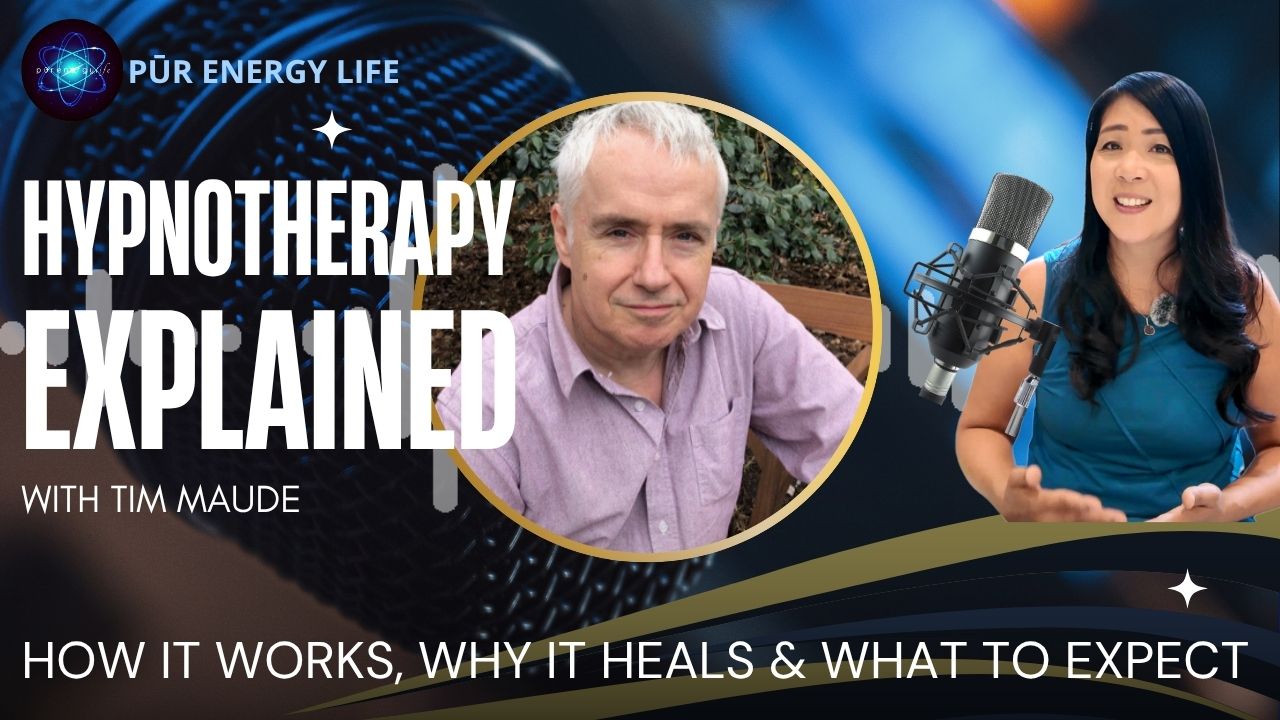
    Afterwards Alison told me, “It wasn’t what I thought.”

    Alison Cairns of Pūr Energy Life interviewed me as part of her video channel. She came knowing nothing about hypnotherapy and asked lots of questions. I took her through a brief hypnosis simply for relaxation, and she talks about the experience afterwards. It’s about an hour and a quarter long – so settle down with a cup of something before you start watching.

    Pūr Energy Life

    https://purenergylife.thinkific.com/

  • Poor Self-Esteem: Getting Out of the Negative Spiral

    Poor Self-Esteem: Getting Out of the Negative Spiral

    Not everyone has the self-esteem of politicians. In fact, there are some (or maybe many) politicians whose self-confidence comes over as arrogance. But it is the people at the other end of the scale that I want to talk about today – those people who lack self-esteem.

    For those people who don’t really believe in themselves, life can be miserable – always holding back, always thinking everyone else is better than them. They don’t believe that they can achieve anything in their lives and don’t believe they are worth anything.

    What are the Signs of Someone Who Lacks Self-Esteem?

    People who have poor self-esteem will often have some or all of the following characteristics:

    • An almost constant feeling of anxiety.
    • They have little confidence in taking decisions.
    • Their lives seem to be controlled by other people’s decisions.
    • They believe that everyone else is somehow better than themselves.
    • When there is a problem, they tend not to ask others for help.
    • When someone compliments them, they tend to believe that person is lying.
    • They don’t do new things because they are afraid they won’t do them well enough.
    • They don’t say “No” when asked to do something which isn’t their responsibility.
    • They spend a lot of time doing things just to please other people.
    • They are never proud of their achievements.

    Can You Do Something About Low Self-Esteem?

    Why is it difficult to do something about poor self-esteem? The answer is simple. If you have poor self-esteem, if you don’t believe in yourself, then you don’t believe you are capable of change. But, of course, you are quite capable of changing, even though you don’t believe it.

    It is hard to change a belief about yourself. It feels like you are attempting to pull yourself up into the air by holding onto your ankles and lifting. If you don’t believe you can do it – why start?

    I am writing this today to let you know, in no uncertain terms, that you can do something about it. You don’t have to have the arrogance of some politicians (you know the ones I am talking about), but to have an honest understanding of what you are capable of achieving leads to a happier life. And a better understanding of your own self-worth leads to a more balanced view of yourself.

    What Can You Do To Tackle Low Self-Esteem?

    There is a lot of advice that people will give you about tackling low self-esteem – such as being kind to yourself and challenging negative thoughts. If you can manage to do these on your own then go for it! There is no better therapy than doing it yourself.

    However, it is often difficult to be your own therapist, so you may want to see a counsellor or CBT therapist for example. As always, I would recommend hypnotherapy.

    Hypnotherapy is an Excellent Aid to Low Self-Esteem

    Hypnotherapy is good for people with low self-esteem because it address the sub-conscious and those limiting beliefs that cause the problem in the first place.

    I work out of my hypnotherapy clinic in Fleet, Hampshire as well as working with clients online. I focus on issues around anxiety, and poor self-esteem often goes hand-in-hand with anxiety. If you want to Contact Me, I will be happy to arrange a few minutes chat about it.


    Photo by Cottonbro Studio on Pexels