Category: Hypnotherapy

  • How Does Hypnotherapy Work and Why is it So Good for Anxiety?

    How Does Hypnotherapy Work and Why is it So Good for Anxiety?

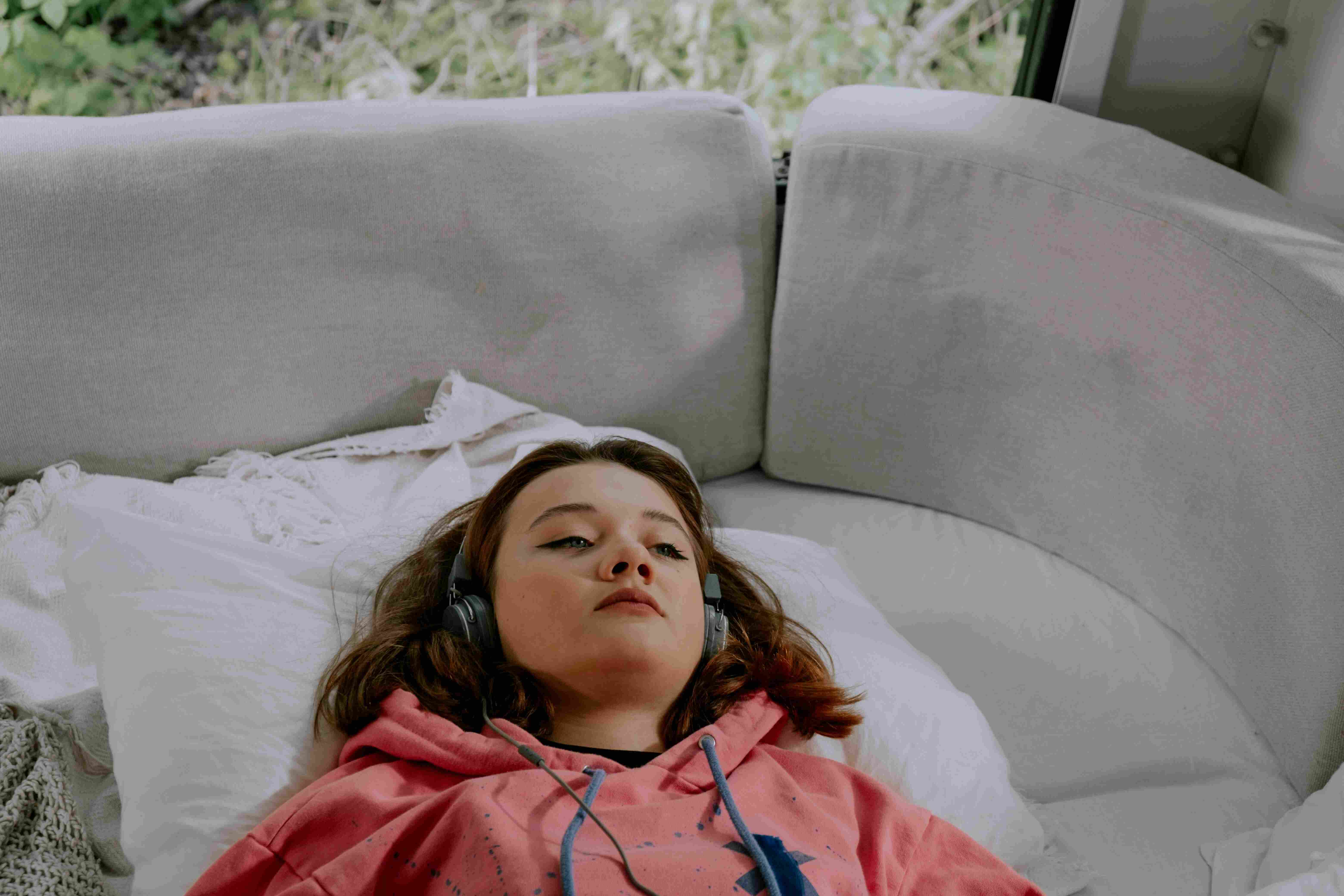
    Hypnotherapy is a form of Non-Sleep Deep Rest (NSDR), a state in which the body and mind are at rest without being asleep. During NSDR the part of the brain associated with anxiety (the amygdala) reduces its level activity. So while you are in a hypnotic trance, your anxiety levels decrease.

    In a relaxed state, your mind is more open to considering suggestions and positive intentions and this allows your brain to make changes so that you can become calmer and less anxious. A hypnotherapist will use this to lead you into making the changes you need to become a more relaxed and calm individual.

    Of course, hypnotherapy isn’t just about anxiety reduction, although it is particularly effective in this respect. Hypnotherapy can allow an individual to make a wide range of changes that they do not seem to be able to do on their own.

    Some of my clients tell me that they fall asleep on my hypnotherapy couch. Although it may seem like it, they are not asleep – simply very relaxed. Within the brain, deep sleep is characterised by delta wave activity During hypnosis, there is an increase in alpha and theta waves, associated with creativity and relaxation.

    If you want help in controlling your anxiety levels, you may Contact Me. I use hypnotherapy to help people with anxiety to regain control of their lives. I work out of my clinic in Fleet, Hampshire as well as working online.

    References

    Unlock the Awesome Brain Benefits of Non-Sleep Deep Rest (NSDR)
    https://thebestbrainpossible.com/nsdr-brain-mental-health-benefits-huberman/

    What are Delta Waves?
    https://sleepspace.com/what-are-delta-waves/


    Photo by cottonbro studio on Pexels

  • The Starting Point for Hypnotherapy: What Do You Really Want?

    The Starting Point for Hypnotherapy: What Do You Really Want?

    Every week I see clients in my hypnotherapy clinic who come to me with problems. They are having panic attacks, or sleep problems; maybe they are struggling with depression or worry; sometimes they are concerned about how much they drink or how much sugar they are eating.

    Whoever they are, they usually start with a problem. They tell me that they don’t want to have the problem. It is something they are doing or feeling or thinking about that they don’t like – they just want to get rid of it and can’t seem to do it on their own.

    After hearing what the problem is, I will usually ask: “So what do you want instead? What do you really want?”

    The Subconscious’s Role

    If you are thinking, feeling or doing something that you don’t really want to – it is your subconscious that is prompting you to do it. The subconscious is not good at processing things that are said in the negative. If I tell you not to think of a pink elephant – you have to think of a pink elephant in order to decide not to think about it. If I tell you not to keep doing your problem, your subconscious is prompted to think about it again – which just re-enforces the problem.

    Start With the Positive

    So I want to find out – what does my client want instead. Suppose a client comes to me complaining of anxiety when travelling on a train. It is important to start to understand how they would like to feel when travelling on a train – calm maybe … or excited … or maybe they don’t want to feel anything about and just get lost in a book.

    Whatever it is, thinking about how they would like to feel is the first step on the path to getting rid of the problem.

    You Can Do This Yourself

    So if you get worried about something – you can start by asking yourself, “How would I like to feel about it?” “What would it be like if I did feel like that?”

    Or if you find it difficult to get to sleep at night, ask yourself, “What would I like to feel like when I get into bed?” “How would I feel in the morning after a good night’s sleep?”

    I know that this is not the whole answer – it is just the starting point. But it is one step on from simply worrying about the problem.

    And Finally …

    There are a lot of things you can do to help yourself when you have problems, but if you cannot manage to get through on your own, you might consider therapy of one type or another. I help people with anxiety and other issues in my hypnotherapy clinic in Fleet, Hampshire and also online. If you want to Contact Me, I would be happy to have a chat.


    Photo by cottonbro studio on pexels

  • Five Things That Are Not True About Hypnotherapy

    Five Things That Are Not True About Hypnotherapy

    There are many ideas and myths about hypnotherapy that are entirely wrong. Here are just some of them.

    Hypnotherapy is Not Just About Quitting Smoking

    Hypnotherapy is known for helping people give up smoking. Many people do not realise that hypnotherapy can help people with all sorts of other issues – issues such as anxiety, depression, “bad” habits, phobias, psychological sexual problems, lack of confidence and so on.

    In fact hypnotherapy can help anyone who has problems about feeling in a way that they don’r want to feel, thinking about things they don’t want to think about, or doing things that they don’t really want to do.

    Hypnotherapy is Not Just Woo-Woo

    Some people think of hypnotherapy as a bit woo-woo – an unconventional treatment that is strange, alternative and unscientific. It is true that hypnotherapy has not yet achieved the level of scientific research to allow it to become a mainstream therapy. However, it is based on science.

    At the heart of hypnotherapy is the understanding of the brain and how conflict within it sometimes leads to a person not being the person they want to be. There is growing scientific research that is pushing hypnotherapy into being the mainstream.

    A Hypnotherapist Cannot Make You Do Something You Don’t Want To Do

    You may have seen or heard of a stage hypnotist who, apparently, makes someone from the audience cluck like a chicken. These stage performers have given clinical hypnotherapists a bad name. Stage hypnotists are very clever at picking out people from the audience who are perfectly happy making an idiot of themselves on stage – and just need an excuse to do so.

    You cannot be made to do something you don’t want to under hypnosis. Hypnosis just makes it easier to achieve what you want to achieve.

    There is No-one Who Cannot Go Into a Trance

    Some people are concerned that they may not be able to go into trance. They are wrong – everyone can go into a trance.

    If you can watch a film or read a book and get lost in the story, if you ever catch yourself day-dreaming, if you drive to work and then realise that you don’t remember any of the journey, then you can go into trance. We go into and out of light trances every day. What a hypnotherapist does is to take you into a trance that may be slightly deeper than these experiences.

    You Cannot Get Stuck in a Trance

    I have met people who worry that they will might get stuck in trance and not be able to get out again. This is nonsense.

    When you are in a trance, your conscious attention may be drawn away from what is around you. If left in this state, you will naturally come out of trance sooner or later.

    And Finally …

    Although I specialise in helping people with anxiety to get themselves back in charge of themselves and to return to a state of normality, I also help people with all sorts of other issues. I run my hypnotherapy clinic in Fleet, Hampshire and also work online. If you think I might be able to help you, Contact Me and I will be happy to have a chat.


    Image by Leandro De Carvalho from Pixabay

  • Winter is Coming: How SAD is That

    Winter is Coming: How SAD is That

    Winter is coming, and fortunately spring comes just after that … but in the meantime, we have to deal with the winter. “Winter” is a word that has been used to signify a downturn in events from everything from Shakespeare to Game Of Thrones. This is because winter can encourage feeling of sadness and depression in some people.

    Seasonal Affective Disorder – SAD

    Seasonal Affective Disorder is a condition in which one feels particularly low during certain seasons (usually the winter). If the individual already has anxiety or depression, SAD will magnify the symptoms. At this time of year, I often see clients who tell me that they always feel bad as the night’s draw in.

    As well as a low mood, symptoms include difficulty concentrating, changes in appetite, changes in the amount of sleep, and a lowering of sex drive.

    The causes are not known, but it is suspected that the change in the amount of daylight hours is a strong contributing factor. Genetics too are a potential cause.

    How Common is SAD

    A 2021 survey of 2,000 adults in the UK suggests that around one in twenty have been diagnosed with SAD, and that about three times as many as that suffer from low moods in autumn and winter (although they don’t know why).

    Official figures from USA suggest that up to 3% of the US population suffer from SAD.

    My personal experience is that: for the people I see in my anxiety clinic, I would expect that SAD symptoms occur more commonly than these figures suggest in people with anxiety.

    Treatment of SAD

    Whether or not someone has been diagnosed with SAD, there are various treatments available. Broadly speaking, these break down as follows:

    • Self-help measures – such as getting out into the natural sunlight as long as you can each day
    • Light therapy – here you need a special light (known as a light box) which simulates natural sunlight – you need to sit in front of this light for some time each day
    • Talking therapy – where you work with a therapist to help you get through the season

    And Finally …

    I help people with anxiety and other mood disorders such as SAD using hypnotherapy. Hypnotherapy is a combination of a talking therapy and hypnosis. If cannot manage your symptoms on your own, you can Contact Me and I will be happy to talk to you about what I can offer. I work out of my clinic in Fleet, Hampshire as well as working online.

    References

    NHS overview of seasonal affective disorder – SAD
    https://www.nhs.uk/mental-health/conditions/seasonal-affective-disorder-sad/overview/

    Mind overview of seasonal affective disorder – SAD
    https://www.mind.org.uk/information-support/types-of-mental-health-problems/seasonal-affective-disorder-sad/about-sad/

    Micro Biz Mag SAD survey
    https://www.microbizmag.co.uk/seasonal-affective-disorder-statistics/

    USA National Library of Medicine over view of SAD
    https://medlineplus.gov/genetics/condition/seasonal-affective-disorder/


    Photo by Erik Mclean on Pexels

  • Take Control of Your Life with the Three P’s

    Take Control of Your Life with the Three P’s

    There are times in everyone’s life when they seem to loose control. Stress levels hit the roof and they loose a sense of being in control of what is going on. Maybe it is anxiety … maybe it is depression … or maybe there is a simmering anger sitting just beneath the service. It is time to do something about it.

    When you decide it’s time to regain control of your life – you have a number of choices. A lot of people will go to their doctor and get medication. Some will find a therapist to help (I see people every week who have taken this route). And some will look to do something about it themselves.

    The Three P’s

    If you want to do something about it yourself, one of the best ways to normalise your brain is to adopt the 3 P’s into life. You don’t have to have lost control of your life before you start doing this. In fact, you would be far better off adopting the three P’s just to avoid getting into that state in the first place.

    P1 Positive Thinking

    When everything seems to be going wrong in your life, it becomes very easy to focus on the negative. We notice everything that seems to be conspiring against us. Our brains automatically bring our attention to things that are not working for us.

    It takes effort, but if you can deliberately identify the positive things that are happening to you, no matter how small, you can start to regain control of your thinking. Notice even the little things – a nice cup of coffee, a greeting from the person checking out your groceries at the supermarket, or the warmth of the bed as it gradually warms up when you snuggle down under the duvet.

    P2 Positive Action

    It is easy, particularly when you are feeling down, to resort to doing something mindless, like slumping in front of the TV, or endlessly scrolling through your phone. These are little distractions that block out all the negative things that are going on in our minds.

    Instead, make the effort to do something positive. It does not have to be much. Maybe get up and make a cup of tea, go for a walk, or do that household job that you have been putting off for so long. Just go and do it. Taking positive action and doing something that will make your life a bit easier gets your subconscious to realise that it can do something about the situation you are in.

    P3 Positive Interaction

    How often have you avoided talking to other people, just because it’s too much effort. When we are feeling low, our automatic reaction is to avoid other people – or seek out other people to tell them all about our problems.

    It is that positive interaction with others that helps you get back in control. So have a chat with a neighbour when you bump into them on your street, talk with the people around you at work, or go out with friends. Talk to other people about what is good in your life.

    Putting It All Together

    When you have this positive interaction with others, do things that positively affect your life and think positively – when the three P’s are all in play – the chemical balance in your brain will undergo changes. These changes tend to lead to a sense of more control in your life, and your life becomes happier.

    And Finally …

    For some, this is all too hard or takes to long and they want a quicker solution. Hypnotherapy is just one of several therapies known to help. I work as a hypnotherapist in Fleet, Hampshire and would be pleased if you Contact Me – but only when you are really ready to do so!


    Picture Courtesy of Claire Harvey
  • Anxiety Behind the Wheel – a Common Complaint

    Anxiety Behind the Wheel – a Common Complaint

    George was driving on a motorway and feeling a tension creep into his body, as he noticed a fear starting to rise. As he gripped the steering wheel even more tightly, he felt as if a fog had descended into his mind, and the fear gradually took over. He stayed in his lane, tailing a slow-moving lorry to the next exit, thinking that this would be the last time he would ever drive on a motorway.

    Anxiety While Driving

    George is not a real person, but his experience is not as rare as you might think. There are many people out there who find their lives restricted because of anxiety and fear at the thought of driving on motorways and main roads.

    A survey by Aviva in 2023 found that a surprising one-in-seven motorists report having anxiety that affects their driving. These motorists report physical symptoms such as rapid heartbeat, sweating, nausea, chest pains and difficulty breathing. The technical term for this problem is Vehophobia.

    Note: If you have anxiety about driving that might affect the safety of yourself, passengers or other road users, the law requires you to inform the DVLA.

    How Hypnotherapy Can Help With Vehophobia

    When someone is so anxious that they avoid driving on motorways or main roads, or maybe only drive on roads they are familiar with, this restricts what they can do in life. Among my hypnotherapy clients have been people who are too anxious to drive to visit their elderly relatives, who only travel on minor roads, and even those who can no longer drive to work without what seems like a major trauma.

    Hypnotherapy engages their subconscious mind to enable it to gradually accept driving as something normal. In my experience, this does not happen overnight; it takes a few weeks of regular hypnotherapy sessions for the subconscious to become calmer about driving. Of course, there are people for whom hypnotherapy is inappropriate, and so there are other options, such as CBT.

    Hypnotherapy works by engaging the subconscious, along with taking on tasks that each client chooses with the help of the hypnotherapist.

    The Outcome

    Imagine the difference it would make to someone’s life, once they are able to drive freely on any motorway and road in a state of relaxed alertness. For many, this can open up the possibilities of their once-restricted lives. It provides a sort of freedom from the restrictions imposed on them by their vehophobia. It opens up their world.

    What Next …

    If you feel you need help in overcoming anxiety over driving, you can Contact Me and I will be glad to talk. I operate my hypnotherapy clinic in Fleet Hampshire as well as working online.

    References

    Aviva Anxiety Survey

    https://www.aviva.com/newsroom/news-releases/2023/06/one-in-seven-motorists-say-anxiety-affects-their-driving/

    Hypnotherapy to help tackle driving anxiety

    https://www.hypnotherapy-directory.org.uk/memberarticles/driving-anxiety-can-hypnotherapy-help


    Photo by Markus Spiske on Unsplash