Tag: #anxiety

  • What is a “Normal” Level of Anxiety?

    What is a “Normal” Level of Anxiety?

    Everyone has anxiety sometimes. Reacting to things that are dangerous or potentially dangerous is an important function of the brain. Anxiety is what kept our ancestors alive in the days when the world was more dangerous than it is today. Why? Because anxiety makes you focus on the potential danger and helps you escape.

    Everyone has anxiety sometimes. Step out into the road without looking properly and you might notice a car approaching you at speed. In an instant your whole body is filled with adrenaline and you jump out of the way. You feel a shock of anxiety run through you and a relief as the car rushes past you, leaving you unharmed. This is anxiety doing its job.

    For a wildebeest crossing the Serengeti, anxiety is three minutes of absolute terror as it is being chased by a lion – resulting in either escape or death. For a human being, anxiety can be years and years of worrying that there might not be enough money to pay the rent this month. Both focus on the potential danger, but because of the human being’s ability to imagine the future, anxiety can last for years.

    So what is a “normal” level of anxiety? Of course, there is no “normal”. Everyone is different. For some people, a level of anxiety starts when they wake up each morning and carries on throughout the day. These people have accepted constant anxiety as the norm and do not realise that they can do something about it. Others live a life of calm, only suffering bouts of anxiety when they step out into the road without looking.

    Wherever you are on this spectrum of anxiety – you can do something about it to change. You can move yourself to a calmer, less-anxious life. The next question is – is it worth it? If you are content with your life as it is, then don’t change a thing, but if you even have the smallest dislike about the way you are, then I would recommend you do something about it.

    There are lots of things you can do to improve your mental health (e.g. read this blog article – https://timmaudehypnotherapy.co.uk/2024/03/12/how-to-stay-mentally-fit-the-mental-health-hygiene-triangle/).

    I would wish you all good luck on your journey through life – and luck has a part to play, but you might want to rely on your own efforts to help you on towards a better life.

    And Finally …

    If you struggle to manage your levels of anxiety on your own, you can always get help. I support people with anxiety, helping them get back in control of their lives. I use the power of hypnotherapy from my clinic here in Fleet, Hampshire, or online. Contact me if you are interested.


    Photo courtesy of Mental Health Foundation / Kerry Adams

  • Anxiety Control: Letting Nature Lend a Hand

    Anxiety Control: Letting Nature Lend a Hand

    The natural world has an ability to sooth the anxious mind. Simply being in “nature” helps sooth away the stresses of the day, leaving us less anxious and more in control of our lives. Going for a walk in the natural world has an even greater effect.

    The Science Behind Anxiety and Nature

    Many people experience the soothing effect of walking through the countryside, in a forest or along the beach. And guess what … there is some real science behind it. There have been numerous experiments that now support this.

    Trials have shown that, after doing a task that increases stress, recovery occurs more quickly in a room with views of trees through the windows, as compared with a windowless room. Another test showed that stress recovery was better if a person goes for a walk in a natural environment, as compared to going for the same length of walk in an urban environment.

    There is a growing amount of scientific evidence that supports the idea that being in a natural environment is good for both your physical health and mental well-being. A few references to scientific papers are provided at the end of this article.

    Why Does Being in Nature Helps Mental Health and, In Particular, Anxiety?

    Think about the history of humankind. For thousands of years, men and women have lived together on this Earth. Most of that time, we have lived close to nature. Our brains are more attuned to living in a natural environment than they are to living in a city. It is only comparatively recently that so many people live in an urban environment.

    That is not to say that cities are in any way a bad thing. On the contrary, they are a fundamental part of civilisation. However, we need to be aware that getting out into nature can be one factor that helps stem our stresses and anxiety.

    Putting it into Practice

    I am lucky enough to live within a short walk of woodland with plenty of scope for getting out for a walk on a regular basis. Not everyone is so lucky. You need to ask yourself, what is the closest to a natural environment that I can get to? It might be a beach or a local park – even in a city like London, there are many small green spaces set aside for people to wander through.

    One of the studies I have looked at suggests that you should aim to spend 120 minutes a week in nature. This may not be practical for everyone – so just do what you can.

    And Finally …

    I often write about things that you can do yourself to help your anxiety. However, if you need help, then I am very happy to talk to you about the possibilities that hypnotherapy can give you. Contact me when you are ready to take things forward. I work in my clinic here in Fleet, Hampshire, and I also work online.

    References

    Spending at least 120  minutes a week in nature is associated with good health and wellbeing
    https://www.nature.com/articles/s41598-019-44097-3

    Tracking restoration in natural and urban field settings
    https://www.sciencedirect.com/science/article/abs/pii/S0272494402001093

    Restorative Effects of Natural Environment Experiences
    https://journals.sagepub.com/doi/abs/10.1177/0013916591231001


    Photo courtesy of Mental Health Image Library

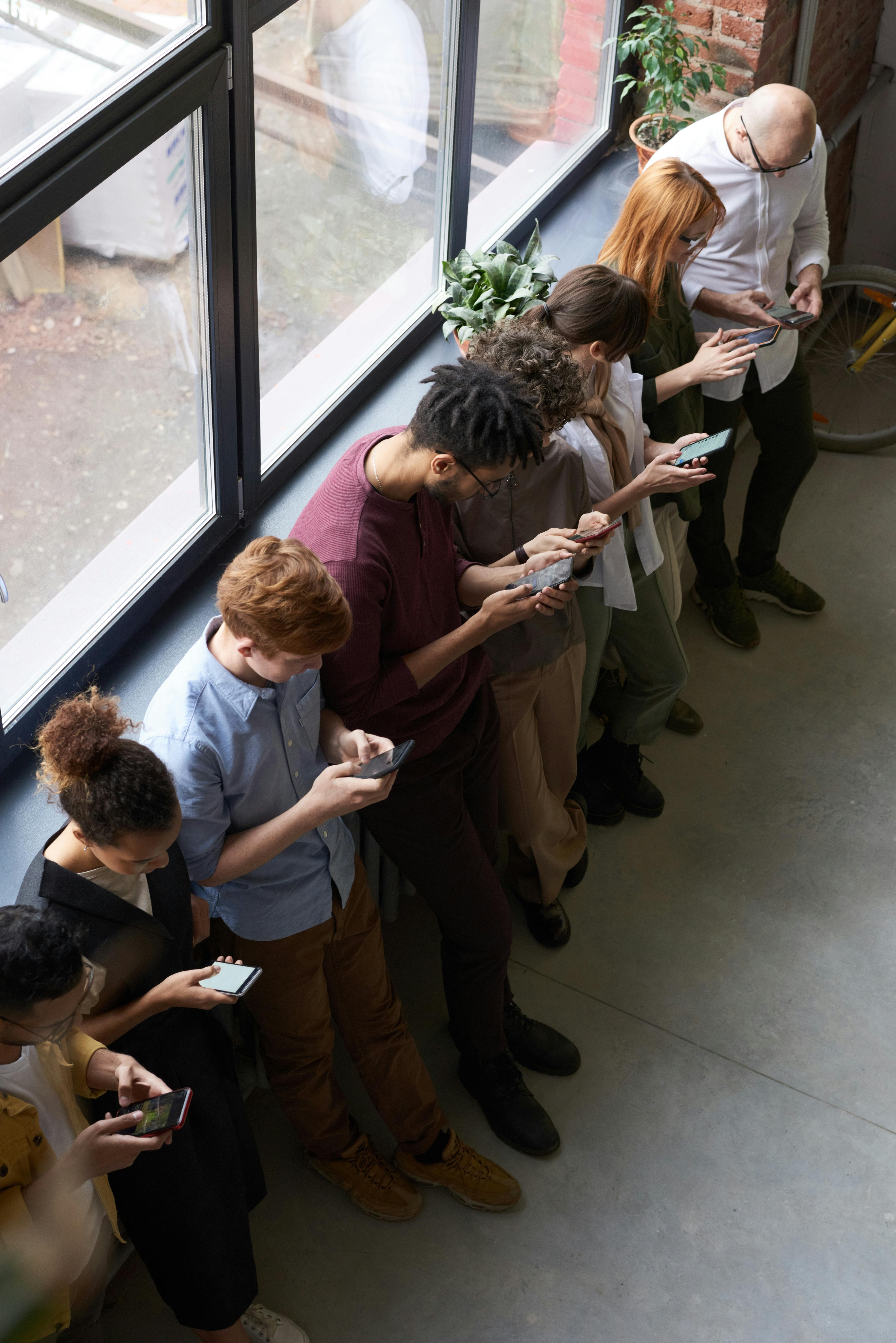
  • Nomophobia and SMA: 21st Century Mental Health Issues

    Nomophobia and SMA: 21st Century Mental Health Issues

    Do you suffer from Nomophobia or SMA? If so, you are a victim of the technological rise of the 21st century. But first, I need to explain what these terms are:

    • Nomophobia is a fear of being without your mobile phone and anxiety when you are without it.
    • SMA is Social Media Addiction – a compulsion to use social media.

    Technology companies are keen for all of us to be using our mobile devices, especially to connect to social media, as much as possible. These platforms are designed to make us want to keep going back and using them again and again.

    Don’t get me wrong – I am all in favour of the use of technology to make the world an easier and more pleasant place to be in. But it is so easy to become attached and addicted to it all.

    Just imagine that, for a day, your phone battery is dead and for some reason you are unable to charge it until tomorrow. How would you feel? Would you be anxious, worried, feel a sense of agitation and disorientation? Does the thought of being without your phone for 24 hours fill you with fear? This is nomophobia – fear of being without your phone because of the anxiety it induces when your phone is not there.

    Do you feel compelled to check your social media channels all the time? How long could you go – comfortably – without checking your social media? Are you looking to see how many likes or shares you have got? Do you feel a compulsion to check up to see what your friends are doing? This is SMA – social media addiction.

    These conditions simply did not exist before the rise of the mobile phone and social media. These are modern day conditions. Over half the world’s population owns a smartphone and over half the world’s population uses social media. Many are able to do without it, but it is those who become addicted that have a problem.

    Mental health issues arise when users become start believing the abusive remarks made to them and others, when they get addicted to graphic pornography or other material, when they are so compelled to online that the rest of their lives suffer. This is a series mental health issue that continues to grow in the 21st century.

    And Finally …

    If you have issues that you need help with, nomophobia, SMA or other forms of anxiety and addiction, you might like to consider hypnotherapy. I run my hypnotherapy clinic in Fleet, Hampshire and (ironically!) also online. Contact me if you would like a chat about how hypnotherapy could help you.


    Photo courtesy of fauxels on Pexels

  • What is a normal level of stress and anxiety?

    What is a normal level of stress and anxiety?

    I have been seeing a client for a number of weeks seeing small changes in her levels of anxiety, but nothing major … until last week. It happens so often. I see small improvements and then all of a sudden there is a step change.

    And the interesting thing was that she said to me, “I feel so calm now. I have realised that I have been through the whole of my life being stressed and anxious all the time. I didn’t realise that this was not normal.”

    Is it normal to be stressed and anxious all the time? Of course not, but it is so easy to get used to it and accept it as normal. Our brains can get used to the constant levels of adrenaline and cortisol in our bodies.

    Of course, a certain level of stress is important, because it helps us get through busy times. It helps us achieve more in a short period of time. And anxiety is important when we are in danger. It gets us to focus on the danger so that we can avoid it.

    Our bodies were never designed to be under constant stress and anxiety, as this raises blood pressure and heart rate, as well as making many of our organs work less effectively.

    You may like to consider – what is a normal level of stress and anxiety for you? Has it always been like this? Are you content with the level it is at now or would you like to change it? Some people are quite happy with higher levels of stress and anxiety – they may even enjoy it. However, if you are among those that do not, you may want to consider what you might do to change.

    If you have problems getting your anxiety under control on your own, you might want to consider therapy. I help people with anxiety get their lives back under control and return to a state of normality. I use the power of hypnotherapy from my clinic here in Fleet, Hampshire. I also work online. Contact me if you would like a chat.


    Photo courtesy of Mental Health Foundation / Adam Jaye

  • Are You Hiding Your Anxiety, While Only Just Coping?

    Are You Hiding Your Anxiety, While Only Just Coping?

    Anxiety happens … It happens to everyone in their lives at sometime or another. It happens to some people a lot more than others. Anxiety effects people in different ways. For some, anxiety is a mild inconvenience, and for others, it dominates their lives.

    Everyone has a different approach to sharing their anxiety. Some hide it away from their friends and family, too embarrassed to say anything and not wanting to burden others with their problems. Others tell anyone who will listen all about the stress and worry they are undergoing.

    Everyone finds different ways of coping with anxiety. Some just put up with it, hoping that it will eventually go away. Others actively challenge anxiety and decide to do something about it. Some people set out to cope with anxiety on their own, and some involved friends, family, self-help groups and therapists.

    And the question I have is: Why does anyone simply put up with anxiety? No-one who sprains their ankle goes about pretending it doesn’t need rest, and that they can still walk without limping. So why do people pretend that anxiety doesn’t exist and that they don’t need to do anything about it?

    To have anxiety means that the fight-or-flight centre of your brain is being over-sensitive. It needs time to recover, and if it’s bad, it may need treatment. It’s just like if you sprain your ankle – it needs time to recover, and if it’s bad, it may need treatment.

    So please … if you are suffering from anxiety, if you are only just coping with it all, and especially if you are hiding it all from the rest of the world … do something about it. Self-help is always a good start. Go and see your doctor. Go and see a therapist. Just don’t suffer in silence.

    And Finally …

    If you need help with your anxiety, in whatever form it might take, you might consider coming to see me. I use hypnotherapy to help my clients get back in control and regain normality in their lives. I work from my clinic here in Fleet, Hampshire and also see people online. Check out my website, and then Contact Me.

    Useful Links

    How to Stay Mentally Fit – the Mental Health Hygiene Triangle
    https://timmaudehypnotherapy.co.uk/2024/03/12/how-to-stay-mentally-fit-the-mental-health-hygiene-triangle/


    Image courtesy of Mental Health Foundation / Natalie Persoglio

  • Fear: And what to do about it

    Fear: And what to do about it

    Before I understood the power of hypnotherapy to regain control of my fears, I had all sorts of things that I was afraid of. I never had a fear of flying, but I had to get my wife to sort out spiders in the house, and the thought of speaking in public made my mouth dry up. Thankfully, that is now all gone.

    When you step back and look at these fears, they are not rational. Flying is one of the safest forms of transport, spiders (at least in the UK) are not going to hurt you, and there is no way that speaking in public will kill you. We call these irrational fears Phobias.

    Phobias are a learned response. Something that happened in the past or something that I learned from other people embedded these fears into my subconscious. It doesn’t matter what it was, and I never had to identify it. The only thing that concerned me was how it effected my life.

    The main problem I had was the embarrassment. As a grown man, I was embarrassed to be scared of such little innocuous things. I tried to hide my fears and pretend they were not real – and that actually made the situation worse.

    And so I put up with these fears until I discovered the power of hypnotherapy, and I started to understand that it is simply that my subconscious has learned something inappropriate. Hypnotherapy allowed me to get back to normal again.

    Since becoming a hypnotherapist, I have had the privilege of helping may people with fears of public speaking, taking exams, wasps, lifts, driving on motorways, and, of course, flying. It is always a delight for me to see my clients simply calm down and return their lives to normal.

    The questions you need to ask yourself are: Is my fear something I am prepared to live with for the rest of my life, or do I want to eliminate it? Is this something that really interferes with me living the life that I want to live? Is it worth the time and money to get rid of it?

    If you really want to leave your fears all in the past, then check out https://timmaudehypnotherapy.co.uk/treatments/#phobias and fill in the contact form at the bottom of the page. I help people with fears and anxiety. I run my hypnotherapy clinic in Fleet, Hampshire and also see people online.


    Photo by Andrea Piacquadio on Pexels