Tag: #anxiety

  • Maintenance of Our Minds for Keeping Anxiety at Bay

    Maintenance of Our Minds for Keeping Anxiety at Bay

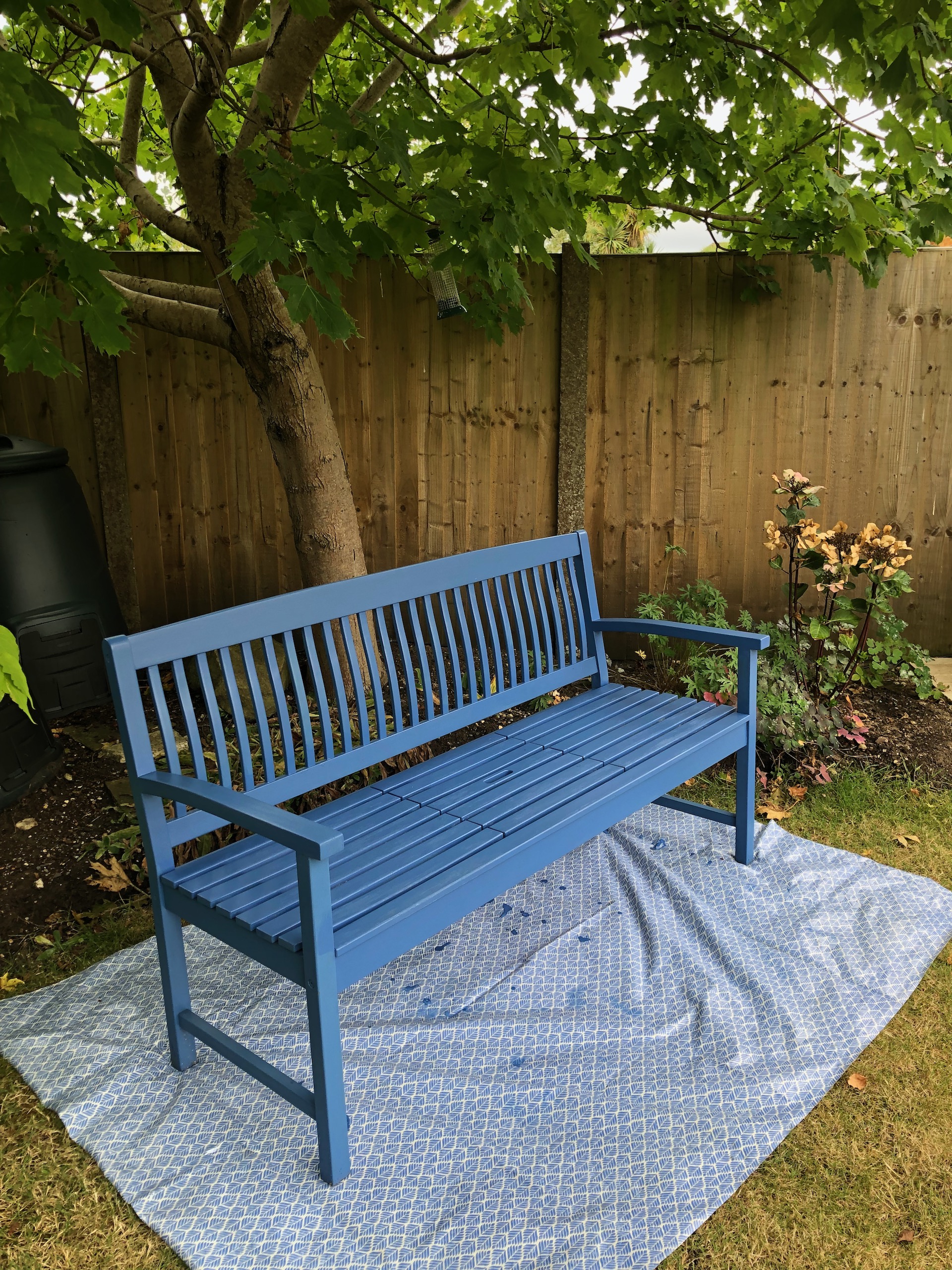
    Yesterday, I painted the bench we have in the garden. We have had the bench for many years, and every couple of years I sand it down and repaint the parts that have got a bit worn. While I was painting, it occurred to me that repainting the bench is a metaphor for looking after our own minds – the bench becomes worn after a while and needs repair, just as our minds develop too much stress and need repair.

    The bench needs attention every couple of years, but our minds need a bit of maintenance more regularly than that. And sleep is a major part of the maintenance regime.

    When we sleep, we go through different stages:

    • NREM Sleep – where our body performs routine maintenance
    • REM Sleep – where our brain performs routine maintenance

    Of course, this is a gross simplification – we don’t know the half of what sleep does for us, but what we do know fall roughly into those two categories.

    During REM sleep our eyes move rapidly around – REM stands for Rapid Eye Movement – and it is in this phase that the brain consolidates our memories. If moves memories around, deleting some of them, or maybe just taking a bit of the emotion out of them. It is a time when the stresses that we have built up can be resolved.

    A build up of unresolved stress can lead to anxiety developing, so sleep is a very important part of our mind’s maintenance programme. However, if there is too much stress in the first place, we don’t get enough time when we sleep to process it all, so it builds up. And a build-up of unresolved stress can lead to anxiety.

    Unfortunately, anxiety can wake us up – this is our subconscious reminding us that we need to do something to sort it all our, so we wake up worrying or ruminating about things. This disrupts our maintenance and so we just add to the stress even more.

    So if you find yourself waking up in the middle of the night ruminating, get up and write down your thoughts. Simply writing your thoughts down seems to have the effect of allowing you to go back to sleep again. Try it – you never know how well it will work for you until you have a go.

    And Finally …

    If you have a problem with sleep or with anxiety in general, you should do something about it. If you need help, you are welcome to Contact Me. I help people with anxiety using hypnotherapy to allow them to get back to normal again.


  • Busy or Simply Overwhelmed? Find Time to Allow Your Mind Some Downtime

    Busy or Simply Overwhelmed? Find Time to Allow Your Mind Some Downtime

    These last few weeks have been a busy time for me. I get up in the morning and think of the things I need to do, and then realise that I didn’t do everything that I meant to do yesterday. Each morning, as I start to plan the day, I feel that there is a level of stress and tension in my body. As a professional who works in the area of stress and anxiety, I know that this stress is necessary in order to keep me motivated to get things done, but if I allow it to run free, it will lead to anxiety.

    A bit of stress gets you to focus on the tasks you need to do. If there is too much stress, the overwhelming feeling prevents you from focusing on the tasks as you mind is distracted by being overwhelmed. The trick is to get the balance right.

    Another problem with having too much to do is that you don’t spend time looking after yourself. You need to spend some time each day in self-care – you need to have some sort of mental health hygiene built into your daily routine. Everyone (well, almost everyone) manages to clean their teeth each day as part of their dental health hygiene regime – a sensible person will not skip cleaning their teeth just because they are busy. So what is your mental health hygiene regime?

    For me, I sit down each morning with a cup of tea and read a page or two from something that inspires me. I have trained myself over the years to focus entirely on what I am reading, and to put aside any other thoughts during this time. I spend a few minutes in quiet contemplation of what I have read. This is only interrupted as my thoughts turn to the warmth of the cup in my hands as I take another sip of tea.

    These few minutes of quietness and contemplation are what I need to start the day with a clear head. Other people take on different practices to allow their head to be clear – going for a walk, doing craftwork or art, lifting weights in the gym, meditation, listening to music … anything really – so long as it clears the mind of all the stuff that is usually there, even if it’s just for a few minutes.

    Our minds need time to rest from what they usually think about. This is particularly needed if you suffer from anxiety. Anxiety tends to absorb your mind and produce negative feelings. Giving it a break from all that – even if it’s just for a few minutes – will to you the world of good.

    So find something that you enjoy. You may not be able to dissociate from negative thoughts and feelings immediately, but the mind is like a muscle – you need to exercise it in the right way in order for it to develop.

    And Finally …

    If you have difficulty with your stress and anxiety, if you feel you cannot manage to control it by yourself, then you may like to seek professional help. I help people with anxiety by using hypnotherapy to allow them to regain control of their mind and return to normal. If you want to ask questions about it, Contact Me and I will be happy to have a chat.


    Photo courtesy of Mental Health Foundation / Peter Cooper

  • Anxiety, Lifestyle and the Choices We Make

    Anxiety, Lifestyle and the Choices We Make

    Our lifestyle choices will have a direct bearing on the levels of stress and anxiety that we experience. There are some anxiety-triggers that happen in our lives over which we have no control, but I want to discuss today how our lifestyle choices impact our levels of anxiety.

    Arts and Crafts

    Involving yourself in some creative activity – making music, pottery, painting, photography … or any of the creative arts and crafts will calm levels of anxiety. Engaging the creative part of the brain focuses attention away from your stress bucket and allows your subconscious to process some of that stress, outside of your consciousness.

    Exercise

    We all know that exercise is good at keeping our bodies in good shape, but it also helps keep our minds well balanced. Our ancestors spent a lot more time moving their bodies, and so our brains are built to expect the chemicals that come with a lot of movement. When we lead a sedentary life, the brain chemistry suffers.

    Healthy Diet

    The way your gut works has a direct impact on the levels of stress and anxiety that you suffer from. Choosing a diet that contains a wide variety of plants and reduces the amount of ultra-processed foods seems to be the way to go.

    A Good Night’s Sleep

    Sleep is the time that our brain gets to process all that stress we are under, so getting a good night’s sleep will diminish the content of that stress bucket that we all carry with us. It largely happens when we are dreaming – our memories of stressful events and anticipated stresses that might happen in the future are consolidated. Some are thrown out and we will never remember them again; others are simply calmed down a bit.

    And the Proof?

    This is not simply wishful thinking. There is scientific evidence that supports these lifestyle choices and links them to a change in anxiety levels (see references below).

    And Finally …

    If you find difficulty controlling your levels of anxiety and would like some help, please Contact Me. I use hypnotherapy to help my clients get back in control of their lives. I work out of my clinic in Fleet, Hampshire, as well as online.

    References

    Pathways linking organ and brain health, and impacts to mental health revealed
    https://mdhs.unimelb.edu.au/news-and-events/pathways-linking-organ-and-brain-health,-and-impacts-to-mental-health-revealed/_recache

    Arts and crafts boost mental wellbeing – study
    https://www.bbc.co.uk/news/articles/cx2yr0d3m1no


    Photo courtesy of Mental Health Foundation / Steve Somerset

  • Overthinking, Anxiety & Table Tennis

    Overthinking, Anxiety & Table Tennis

    Overthinking is both a cause and a result of anxiety. We overthink things we are anxious about, and that overthinking creates more anxiety. You want to know how table tennis is involved? … Then read on.

    Overthinking means being caught in that state of mind where you are going over and over the same thing in your head. Maybe something happened that you did not like, and you go through what happened time after time, trying somehow to square it all away. Or maybe you are concerned about something that is coming up, and think about what might happen over and over again. This is overthinking.

    What Is Wrong With Overthinking?

    The problem with overthinking is that no matter how many times you go over something that has already happened – you cannot change it. It is gone … learn from it and then move one. Thinking about it again and again will not change what happened and will not change how you think about it.

    If you are overthinking something that is coming up – something you are worried about – it does not change the fact that it is going to happen. Worrying about a work meeting, say, doesn’t stop the meeting happening – it just gets you more stressed about it.

    How Does Overthinking Effect the Brain?

    All the overthinking adds stress to your “stress bucket” – and more stress means that the fight-or-flight centre (the amygdala and other parts of the brain’s limbic system) are more likely to be triggered.

    The amygdala is not an intelligent part of the brain – it is quite primitive. It is not capable of thinking up new ideas. So when the amygdala starts to take control of your thinking, it will simply repeat patterns that it already knows. If you have thought through a situation a couple of times, the amygdala learns this as an “appropriate” response, and so it encourages you to repeat it. The more you repeat it, the more embedded the response gets … and so the vicious cycle repeats.

    How Do You Overcome Overthinking?

    Overthinking is all about repeating patterns of thinking. So you have to practice changing those patterns. When you catch yourself out overthinking, force yourself to think something else. This is a basic distraction technique.

    Simply doing something else that absorbs your thinking, like playing table tennis, will do it. Playing table tennis is something you have to concentrate on. You cannot play table tennis while you are overthinking something else.

    Of course, it doesn’t have to be table tennis. You can read a book, talk to someone (about something other than what you are overthinking), browse the Internet, bake a cake … anything that will absorb your mind into something else.

    And Finally …

    I help people who are only just coping with stress and anxiety. I use hypnotherapy to help them regain control of their lives and return to a state of normality. I work out of my clinic in Fleet, Hampshire as well as online. Contact me if you would like a chat about it.


    Photo courtesy of the Mental Health Foundation / Catherine Williams

  • Anxiety and the Never-Ending To-Do List

    Anxiety and the Never-Ending To-Do List

    One of the many things that gives rise to anxiety is having too much on your plate – that is, you have too much on your “to-do list” and not enough time to get it all done. If you have too much to do, you feel stressed. If you can’t get it all done, the stress never goes away. And if the stress never goes away, it can develop into anxiety.

    The Ovsiankina Effect

    When we have something that needs doing, or is only partially done, it stays in our mind. Intrusive thoughts will invade our mind, telling us that it needs to be completed. It will nag at us until it is completed, creating a tension that inhabits us. In psychology, this is known as the Ovsiankina Effect (after the Russian psychologist Maria Ovsiankina – and, no, I don’t know how to pronounce her name either!)

    So, when you have ten jobs to do in the day, you may find yourself rushing round to finish them all. You may also notice a tension in your body and mind while they remain unfinished. When the last one is completed, there is that “Aaaahhh” moment when you can relax.

    If you have too much to do, and never get to the end of the to-do list, you are always in a state of tension and never reach the point at which your mind can relax. If this goes on too long, it can lead to anxiety.

    Capacity for Stress

    Different people have different capacities for this type of stress. Some people are quite happy with a huge number of unfinished tasks, whereas others find it difficult to cope with just a few. So you need to get to know your own self. Learn what leads to anxiety, and what you can cope with.

    What Can You Do About It?

    What can you do about this source of anxiety? Quite simple, you have to reduce the amount of unfinished things on your plate. You have to get some of those jobs finished before starting new projects. Or you just have to take on less, so not as much is going on to your plate in the first place.

    It is often difficult for someone who is a naturally busy individual to slow down a bit, or for someone who likes starting something new more than finishing things off just to stop taking on new stuff and clear the backlog. However – this is exactly what you have to do.

    And Finally …

    I help people who are only just coping with stress and anxiety. If you need help in this area, if you don’t feel you can manage it on your own, then contact me and we can look to setting up some hypnotherapy sessions so that you can get back in control of your life.

    References

    The psychology of unfinished tasks, Dr Hannah Rose
    https://nesslabs.com/unfinished-tasks


    Photo by Meruyert Gonullu on pexels

  • Anxiety In Its Many Forms

    Anxiety In Its Many Forms

    Anxiety manifests itself in many different ways. Some people don’t realise that the cause of their problem are an excess of stress and anxiety. If any of these apply to you, don’t worry – you can get over it. There are many things you can do – hypnotherapy being just one of them.

    Anxiety suffers find that it pops up – sometimes in one way, sometimes in another – and often in many different ways at the same time:

    • There is that feeling of dread when they get up in the morning – a feeling that doesn’t seem to have a trigger. It is just an ordinary day, but when they wake, the feeling of dread is there.
    • Then there is the constant worry. Every little thing seems to be a potential for something that could go wrong. And then if that goes wrong, maybe something else will.
    • And for some, there is a trigger that kicks the anxiety off. Maybe an overwhelming feeling of nervousness when they are about to go and talk to their boss, fly on an airplane, give a talk, drive on a motorway, go on a date … and so on.
    • Some people have physical problems that they don’t even realise is associated with stress and anxiety – digestive problems like IBS, acid reflux and constipation – sexual problems such as loss of libido, erectile dysfunction or vaginismus – migraines, inability to sleep, eczema and so on. Almost any physical problem can be made worse by an excess of stress and anxiety.

    Too many people simply put up with these problems. They hide them from the world behind a mask – that forced smile they use to hold in their emotions. It is important to understand that you can do something about it. It is not permanent.

    I work as a hypnotherapist, every day I help people who are only just coping with anxiety and stress get back to being in control of their lives. It is possible to get over it. Other types of therapy can also be effective. You can get medication from your GP, and you can do a lot simply to help yourself.

    If you are interested in hypnotherapy, you can contact me and I would be pleased to have a chat. I work out of my clinic here in Fleet, Hampshire and also work online.


    Photo by Nicola Crichton at the Mental Health Foundation