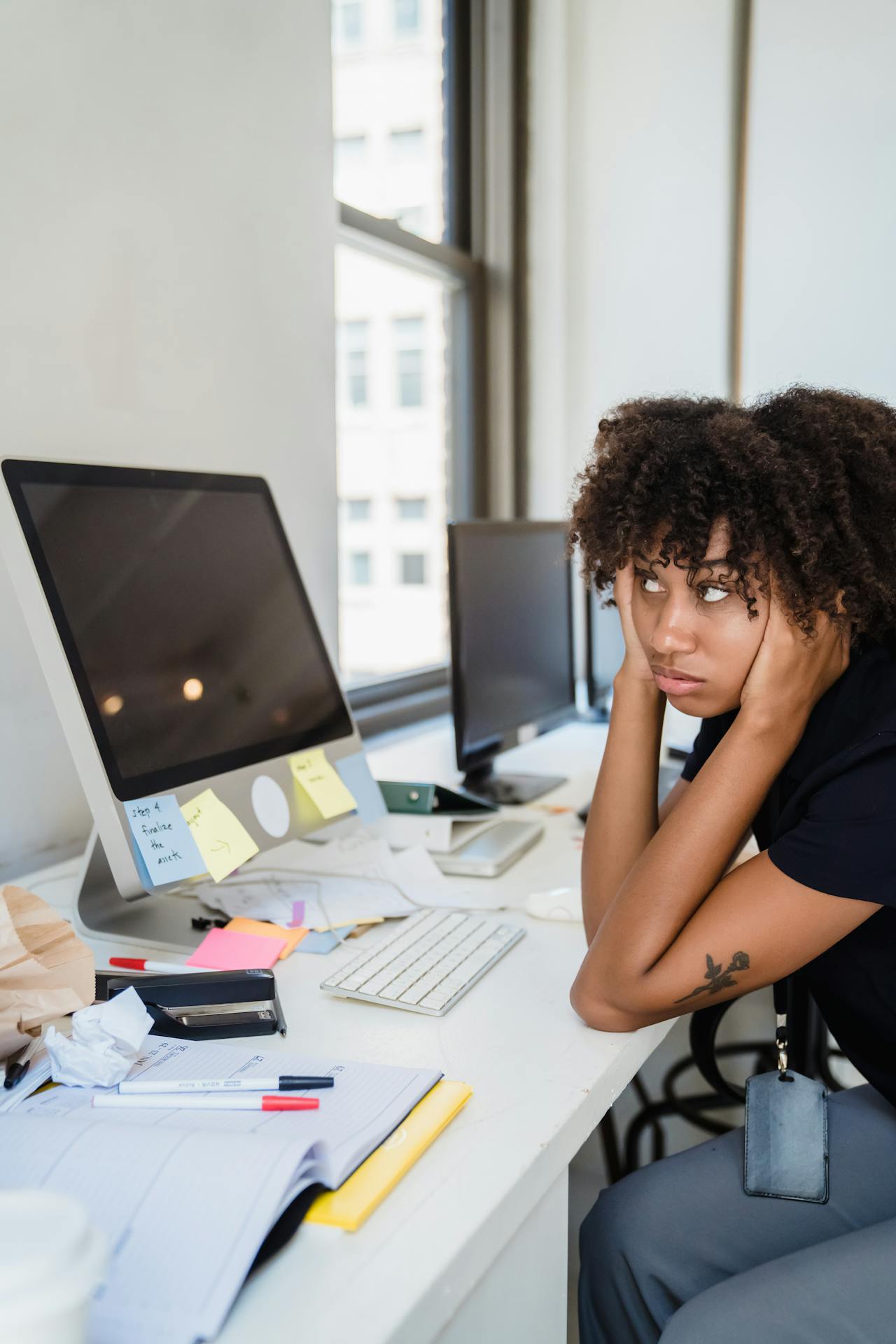
Let me ask you a question: What is your reaction when your plans are disrupted? You know what you want to do, but someone or something unexpectedly stops you.
The other day, I went out on an errand in the car for a couple of hours, and when I got back, the end of my road was blocked off. A notice said, “Road closed – please find an Alternative Route” and I couldn’t get to my house. So I drove round the streets until I got to the other end of my street. A few yards up that way was another notice: “Road closed – please find an Alternative Route”. Both routes to my home had been blocked off.
Let me ask you that question again: What is your reaction when your plans are disrupted? Do you get angry. Do you swear? Do you shout at the people who are preventing you from carrying on? Do you quietly fume, holding it all in? … If you do any of these, you are simply adding to your stress. No matter how indignant you feel, developing that righteous anger will not make the situation any better.
I found a place to park on the street some way off, and walked home. If something upsets my plans, I put it aside and find a way round the problem. I have learnt not to get angry, or tense. I just say, “It is what it is and there is nothing I can do about it.”
You see, getting angry, upset or stressed when someone or something upsets your plans is a response that you have when you already have a lot of stress in your life. When your “stress bucket” is already full, adding another difficulty will push you into anger, anxiety, depression or some other negative emotion. Of course, the negative emotion does not help solve the problem.
Later on that day, the workmen had gone and I walked back to the car and drove it home. I looked for the positives: 1) I got an additional walk in the fresh air, 2) the pot holes at the end of the road were (at last) filled in, and 3) I got an idea and a photo for this blog.
So if your road is blocked, don’t get mad, simply find an alternative route.
And Finally …
I have just made a very glib statement – “simply find an alternative route.” I know that it is not that easy for some people, especially those suffering from anxiety. I help people with anxiety using hypnotherapy to help them regain normality in their lives. You can Contact Me if you want to find out more about how I can help you.
I had to go to hospital today for a routine appointment. As I was waiting, I remembered all the clients I have helped who get anxious about medical visits – doctors’ appointments, hospital visits, medical procedures, vaccinations … and so on.
It is surprisingly common for people to feel anxious about visiting their doctor or going to hospital. Some people feel anxious, but go anyway. Others feel the anxiety build up so much that they miss the appointment. And there are yet others who avoid going to any medical visits because it makes them so anxious.
Being anxious about medical procedures is often combined with an anxiety about health. If you are anxious about your state of health, then you may avoid going to see the doctor or have a medical procedure because you don’t want to know the result. Of course, this makes it more likely that you will have a medical problem that goes untreated.
Hypnotherapy for Medical Anxiety
Hypnotherapy can have a remarkably positive impact on medical anxiety. By calming down the subconscious part of the brain that causes the anxiety, it is possible to see the doctor and have those medical procedures, to help your body heal and get back into a more normal state.
Medical anxiety happens because the subconscious wants to protect you from the unpleasantness of thinking about your own illness, or the invasive nature of some medical procedures. It is not pleasant to think about your own body failing, and your subconscious tries to protect you from that unpleasantness by making you anxious enough to avoid the medical visit. This is not a logical or sensible but, unfortunately, this is how our brains work.
Hypnotherapy gets round the subconscious rejection of medical visits by tackling the fight-flight-freeze part of the brain directly, calming it down and gradually helping it understand that it is okay to go and see your doctor.
The result is that, after a few hypnotherapy sessions, people will be able to face the medical visits with much reduced anxiety, and so be able to look after their own bodies.
And Finally …
If you recognise this anxiety in yourself, or your friends and family, you are welcome to Contact Me to talk about the possibilities of what hypnotherapy might do. I work from my clinic in Fleet, Hampshire and can also work Online – whichever works for you.
It all starts with contacting me for a no-obligation chat.
Nearly one in five couples in the UK are in a “distressed relationship” (See Ref 1) – one in which there are frequent arguments, thoughts of separation and regret over getting together in the first place. The stress that this puts on the couple is immense. For some, this leads to a lot of anxiety, anger, feeling of inadequacy and other negative emotions.
Now, the accepted wisdom for a distressed relationship is to see a couples counsellor: someone who can help the couple work through their issues and come to a more satisfactory ending – be it a more tolerant and happier life together, or separation. This helps with the relationship, but does not necessarily deal with the anxiety that one or both the pair may have to deal with.
How Hypnotherapy Can Help With The Emotions In Distressed Relationships
Let’s start with what hypnotherapy does not do. It does not help sort out what has gone wrong with the relationship. It does not work with the couple together. It just works with one of the pair to deal with their ability to deal with the emotional upheaval. It does not take sides in the relationship. It just helps sort out the emotional turmoil.
There are many negative emotions that arise from a distressed relationship. For example:
Uncontrolled anger when having an argument
Regret over the situation they find themselves in
Fear about the next outburst and argument
Feelings of inadequacy when the partner talks about breaking up
Jealousy that is still there after accepting a partner back after they had an affair
These are just some of the negative emotions that make it difficult to think straight, and so make it difficult to find a way forward.
Hypnotherapy can help sufferers get more in control of their emotions, and so deal with the distressed relationship in a calmer and more rational manner.
What To Do If You Need Help
If you find yourself in a distressed relationship and want help dealing with the emotional stress that you find yourself under, you might like to consider hypnotherapy.
I have helped people with all the emotional issues arising from a distressed relationship listed above, with the result that my clients have been able to control their own emotions and so deal with the situation in a calmer and more controlled manner.
If you would like to talk to me about this, or any other matter, Contact Me and I will be happy to have a free 10-minute consultation to answer any questions you might have. You can also book in for hypnotherapy with me. I work out of my clinic in Fleet, Hampshire, and also work online.
The Internet and the widespread use of smart phones has changed society completely. A lot of our time is spent on our phones. Of course, there are many great reasons to spend time scrolling, but for a lot of people, scrolling becomes addictive starving your brain of the time it needs to rest, and inducing anxiety because of the distorted view of life that the Internet gives us.
Scrolling Can Become Addictive
Scrolling through posts, checking what your friends have posted, monitoring the likes on your own posts … spending hours every day on the Internet is an addictive behaviour. Like all addictions, you start to get anxious when you stop. The addiction simply compels you to keep going.
Every time you scroll on a bit further, your brain is looking for a little bit of pleasure that you get from finding something interesting. But the posts are so short and with very little meaning, that the pleasure is short-lived, so your brain go into overdrive looking for the next one, always hoping that there will be something really good to see in the next post.
If you find that it is really difficult to put your phone down, or not pick it up in the first place, then you have all the signs of addiction. Addiction will only increase your stress and anxiety.
Your Brain Needs A Rest
When it seems like you are on the Internet 24-7, your brain does not have time to rest. If you watch a video or read a post and then move straight onto the next thing, your brain does not have time to process what you have just taken in. It needs time to reflect.
Reflection on what you have seen on the Internet, or experienced in your day-to-day life can happen consciously (where you think things through) or unconsciously (where your brain works on it in the background). When you constantly bombard your brain with more Internet videos, memes, messages and the like, your brain has no time to reflect.
When you have a lot of stress and anxiety, the brain needs time to be quite in order to process the stress you are under. If it is constantly stimulated with new material on the Internet, it can’t do this properly and so stress and anxiety will continue.
Social Media Can Lower Self-Esteem
When your friends or other people you follow post, they generally post when they’re at their best. They post pictures of themselves when they are looking gorgeous; they post about their successes. They do not post videos of themselves when they have just got out of bed, or when they messed something up.
So you spend all day looking at people who are at their best, while you know that you are only at your best occasionally. So your brain unconsciously starts to build the impression that everyone else is better than you. You unconsciously build a pattern of low self-esteem.
And, of course, everyone else is doing the same as you.
Social media is also full of people criticising others. They may criticise you, your friends, or people you admire. This can also bring your down and this can increase your stress and anxiety
Does Your Scrolling Increase Your Anxiety?
Everyone will react differently, so take a step back. Examine your life. Examine the impact the Internet has on you. Ask yourself a few question:
How much is Internet scrolling effecting your life?
Do you scroll in order to avoid doing things that are boring?
Do your scroll when you are bored?
Do you scroll as a distraction from stress?
Do you scroll while doing something else, like watching TV, eating lunch, or sitting on the toilet?
Does the scrolling help you in any way?
And importantly: Does scrolling increase or decrease your stress anxiety?
Only you can tell how it effects you. I have seen many clients who, quite unprompted, come to realise that their lives would be much better if they cut down on their scrolling. Not to stop completely, but just cut back. So step back and think about how it effects you.
How To Escape Internet-Induced Anxiety
If you decide that you want to reduce your Internet usage, here are a few ideas to try:
Make a new rule in your life not to use your phone when you are doing something else where your brain could take a break e.g. No phone use in bed, while on the toilet, while taking your kids to school.
Limit the hours you allow yourself to look at the phone e.g. No looking at the phone after 8:00 pm. No looking at the phone before you are washed and had breakfast. No looking at the phone for non-work matters during working hours.
Take a social media holiday – e.g. No social media for a month.
And Finally …
I offer ideas on how to ease your anxiety issues by yourself, but if you need help, I provide a hypnotherapy service that specialises in helping people with anxiety and depression. I see people in my clinic in Fleet, Hampshire, as well as online. If you Contact Me, I will be happy to answer any questions you might have.
Procrastination leads to increased stress levels. Increased stress levels lead to increased chances of anxiety. If you are a habitual procrastinator, you need to do something about it if you want to ease the additional stress that you are creating for yourself.
What Is Procrastination?
Have you got stuff that needs doing that you have put off? That household job that you know needs doing, but could always be done next week. That medical test that you really should get done, but you don’t really want to know the result. That paperwork that needs seeing to, but is not that urgent.
This is procrastination – putting off doing something until it becomes urgent, even though putting it off adds to your stress. That stress can eventually turn into anxiety.
Why Do We Procrastinate?
When there is something that needs doing, but it’s boring or unpleasant, then it is always easier to find something else to do. That “something else” distracts you from thinking about the thing that needs doing. Scrolling on your phone distracts you from the nagging thought that you really ought to clear those out-of-date items at the back of your fridge.
It’s all about rewards and stresses. Scrolling on the phone give you a small sense of reward, whereas cleaning out the fridge does not. Leaving the fridge just another day does not add much stress. The reward you get from scrolling on the phone is enough to counteract the small bit of stress you get from not cleaning the fridge.
The problem is that the same thing will happen tomorrow, and the day after that, and the day after that … That small amount of stress is always there. And it’s not just the fridge, is it? There are all the other things that you put off, because it’s so easy to do something else more pleasurable.
What Do You Procrastinate About?
It is important to understand the difference between important tasks and urgent tasks.
Urgent tasks need to be done right away, or at least, very soon. If your rent is due today, then it is urgent that you pay it today. If the movie you have gone to see starts in 10 minutes, then it is urgent that you go in and sit down in the theatre.
Important tasks are tasks that are going to have a big impact on your life. It is important that you pay the rent, otherwise you might find yourself being evicted. It would be nice to get to see the movie on time, but, in the grand scheme of things, it is not that important.
Tasks like sorting out that pile of financial papers, booking that medical test that your doctor said you would need, and fixing that slow leak at the back of the sink are important, but they are not that urgent. You can always put them off until next week.
You will tend to procrastinate about tasks that are not urgent, particularly if they are boring or are somehow unpleasant to do. Problems tend to arise when you procrastinate about important tasks that are not urgent. They just get left and provide a constant source of stress while they are not getting done.
How Does Procrastination Impact Anxiety?
When you put things off, you often have that nagging thought, “I really need to get around to doing that.” This thought creates a little bit of stress. The longer you put it off, the more stress it generates.
The more stress you have in life, the more likely you are to develop anxiety. Procrastination itself does not generate anxiety, but the accumulation of the stresses of procrastination with other stresses of life will.
Is Procrastination A Problem For You?
Start by analysing your own behaviour, thoughts and feelings. What tasks are you procrastinating over right now? How much are those tasks creating those nagging thoughts? How does all this make you feel?
Now ask yourself, “What will it be like when those tasks are done?” Get a sense of how good you will feel when they are all out of the way and you can get on with life.
Now step back and evaluate yourself. Is procastination a problem for you? If it is, you should start doing something about it.
How Can You Get Over Procrastination?
If you are a habitual procrastinator, experiment with some of these ideas to find out which combination works best for you:
Write a list of tasks – Listing tasks gives you a sense of control. Write a list of all the tasks that you are procrastinating about. Put this list somewhere where you will see it every day.
Cross things off the list when you have done them – Creating a visible sign of progress gives a sense of accomplishment. When you have completed a task, cross it off your list using a thick pen or highlighter, or if it is an electronic list, highlight the task by making it bold, say.
Do something, however small – Motivation arises when you start doing something. Make a deal with yourself to work at a task for, say, ten minutes. Once ten minutes are over, you can choose whether to continue or finish it later.
Be proud of yourself when you done a task – A few seconds of pride in yourself when you have done something that you have been putting off will motivate you to do some more tasks at another time. Take a moment to step back and look at what you have done. It may not be much, but you can still be proud of achieving it.
Break down big tasks into little tasks – You will feel more motivated to start a small task than a big one. That pile of financial papers that need sorting … divide it into, say, four smaller piles, and just sort one of them to start with.
Reward yourself for doing a task – Promised rewards provide motivation. Make a deal with yourself – I will do something more enjoyable after completing one of the tasks. When you have done one task, reward yourself with half an hour of screen time, or your favourite meal.
Do small tasks immediately – It is difficult to motivate yourself to start on a list of hundreds of tiny jobs. Estabish the “two minute rule” in your life. If you have a task that will take less than two minutes – do it immediately rather than adding it to your list.
Get a friend to hold you accountable – You are more likely to do a task if have told someone else that you’ll do it. Tell your friend what you are going to do and when you plan to do it. Also, tell them when you have done it.
Forgive yourself – Forgiving yourself for your past procrastination will help you do more tasks on your list. If you feel guilty about procrastination, then your list of tasks will only remind you of your guilt feelings, so you may avoid thinking about the tasks. So go easy on yourself.
Book time in your calendar – When you know you have a fixed time to clear some of your backlog of tasks, you will be more likely to do them. Book time to work on them in your calendar, and when the time is up you can get on and do something more enjoyable.
And Finally
If procrastination is a problem for you, then it is a problem. It needs sorting out. Start small and build it up so that procrastination is no longer a habit. If it is not a problem for you, then you don’t need to fix it. Just remember that procrastination adds to your stress, and too much stress turns into anxiety.
If you need some help with any aspect of your anxiety or depression, you may like to give hypnotherapy a go. Contact Me for a free 15 minute consultation. I would be happy to talk your issues through with you and answer any questions you might have.
Credits
Photograph by Mizuno K on Pexels Graphics generated by AI Google NotebookLM