Category: Anxiety

  • The News-Anxiety Dilemma

    The News-Anxiety Dilemma

    The world is a scary place, and it can seem even scarier when you watch the news or read a newspaper. News can increase anxiety levels.

    Some of the people I see in my hypnotherapy clinic have simply stopped watching the News. They have realised that it just adds to their stress and so they have stopped. Others seem to watch the news several times a day, and it makes them very anxious.

    Anxiety often occurs when there is something we are aware of that might go wrong, but is out of our control, like waiting for the results of a job interview, wondering whether you are going to be sick during the Covid lockdowns, or staying up late waiting for your teenager to come home when they’ve gone out on their own for the first time.

    The News is a bit like that – something bad might happen that effects you and your family, and it is out of your control. The News can make you anxious.

    But many of us like to be informed about what is going on in the world. We like to keep in touch with the News – local, national and international. And of course, there is nothing wrong with doing that, provided we can control any additional stress that we might experience.

    It’s all about getting the right balance. Do you ignore the News, just read the headlines, or read everything in detail? It all depends on what you want, and how much it effects you.

    I see people in my hypnotherapy clinic every week who are struggling to cope with anxiety and stress. I help them get back in control of their lives. If you are interested in finding out what hypnotherapy can do for you, check out my website and Contact Me. I will be very happy to have a chat with you.


    Photo by Bhavesh Jain on Pexels

  • Social Anxiety Ruins Lives

    Social Anxiety Ruins Lives

    Social anxiety can ruin lives … Daisy walks down the street worrying about what the other people think of her. She worries that they think she is ugly. She worries that they might stop her and become angry. She worries that they look down on her. Daisy has only a few friends, and although she worries less about what they think, she still worries. Daisy doesn’t get out much.

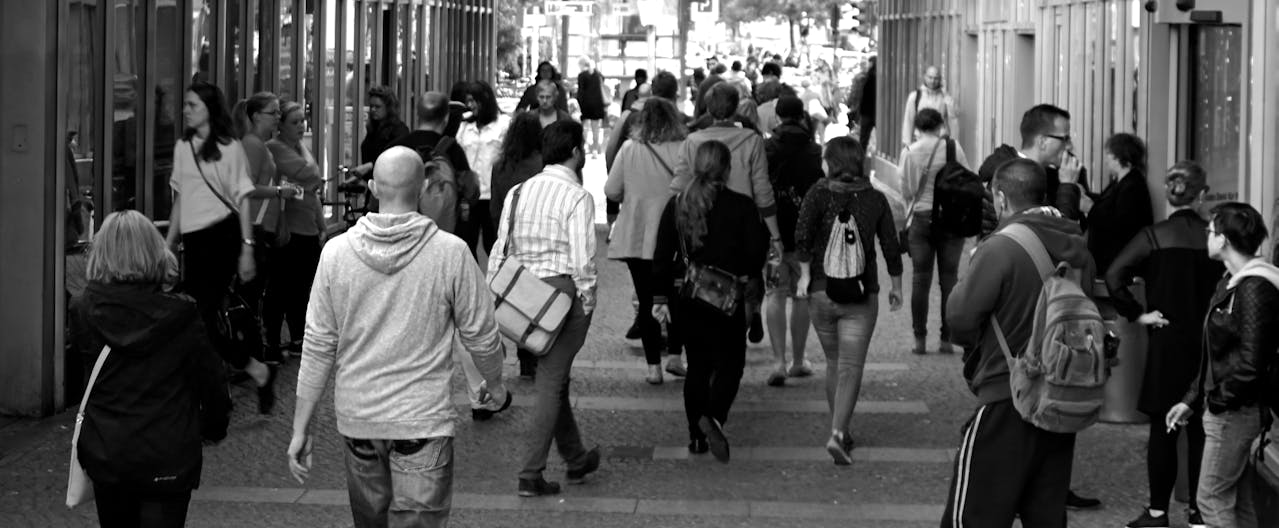
    Now Daisy isn’t a real person, but her social anxiety is real in many people. They get anxious around others – maybe in crowds, or on the phone to strangers, or even just walking down the street. This is social anxiety – anxiety that is triggered by the presence of other people, particularly people they don’t know.

    Whether anxiety is triggered by other people or anything else, it is still anxiety. It is the primitive part of the brain starting to take over, trying to stop you doing something that might be dangerous. Of course, other people are not likely to be a threat, but that does not stop that primitive part of the brain reacting in the way it does.

    So if you have a bit of social anxiety, remember that the other people around you are not judging you. They are not going to stop you and get angry. They probably don’t even notice you as you pass them by on the street.

    If you have difficulty in getting over social anxiety on your own, you might consider hypnotherapy. I help people with all types of anxiety using hypnotherapy, helping them get back in control of their lives and feel normal again. You can Contact Me if you want a chat about how I can help.


    Photo courtesy of Keira Burton on Pexels

  • Anxiety, Depression and Ultra-Processed Foods

    Anxiety, Depression and Ultra-Processed Foods

    There is increasing scientific evidence that links ultra-processed foods with depression and anxiety. That is, people with anxiety and depression are more likely to have more ultra-processed foods in their diet. We have not yet got clear evidence that eating more ultra-processed foods actually causes anxiety and depression, but it looks like that might be the case.

    What Are Ultra-Processed Foods?

    Think of food in three stages of processing:

    1. Raw food – that is uncooked food, straight from the plant or animal – an apple, an egg, a raw potato, a stick of celery, or a raw steak for example. Some of these we can eat just as they are, and others have to be processed by cooking.
    2. Processed food – that is raw food that has undergone some processing to make it possible to eat, or simply more palatable – a cheese omelette, boiled potatoes, a seasoned steak cooked on a barbecue, or a mixed salad with homemade dressing for example.
    3. Ultra-processed food – that is, food that has undergone some chemical or processing changes to encourage consumers to buy it. Typically mass-produced, ultra-processed foods may have a longer shelf life because of preservatives, more brightly coloured because of artificial colours, sweeter because of artificial sweeteners or excess sugar, more palatable because of an excess of fat and salt, and generally quick and easy to eat – commercially produced pizza, fizzy drinks, white bread, or microwaveable meals for example.

    Do Ultra-Processed Foods Cause Depression?

    There are a number of scientific studies that indicate that people who eat a lot of ultra-processed foods are more likely to suffer from depression that those who eat less. For example, there was a study in France that followed over 20,000 people for over five years. The result of the study was that they concluded that eating more ultra-processed food was “linked to an increased likelihood of experiencing depressive symptoms.”

    Now that may, or may not, be because ultra-processed foods actually cause depression. The fact is that we don’t actually know, but to me it seems plausible.

    Do Ultra-Processed Foods Cause Anxiety?

    There has been less work on studying the link between ultra-processed foods and anxiety. However, these smaller studies also conclude that people eating more ultra-processed foods are more likely that average to suffer from anxiety.

    Again, just as with depression, we do not know if the ultra-processed foods actually cause the anxiety, but to me this certainly seems likely.

    How Can Ultra-Processed Foods Effect Mental Health?

    What we eat effects the bacteria and other tiny organisms that live in our guts. These tiny organisms live in the guts of all animals and help us digest the food we eat. The types of micro-organisms that live there depend on the food we eat. So eating ultra-processed foods will effect what micro-organisms are in our gut and how effective they are.

    Surprisingly, our gut has its own set of neurons (the cells mostly found in the brain). These are sometimes referred to as our “second brain”. We are not aware of it, but it is in constant communication with our brain. So when our gut is not working as effectively as it should, signals between our “second brain” and our brain may be impacting our mental health.

    Again, from a scientific point of view, we do not know the exact mechanism, but in broad terms, this gut-brain connection seems to be it.

    How Do I Avoid Ultra-Processed Foods?

    In the modern world, it is very difficult to completely avoid ultra-processed foods. The only way you can be sure of avoiding them is to cook all your own food from the raw ingredients, and not many people have the time or inclination to do this.

    However, you can cut down the amount of ultra-processed foods you eat. If you examine your diet, and start swapping some ultra-processed foods for something you have cooked yourself from the raw ingredients. Just do it bit by bit.

    And Finally …

    Many people who reduce the amount of ultra-processed foods they eat notice the change in mood that comes over them as they do so. However, this is not a cure-all. If it works for you, then go for it. If you need something extra, you might like to give hypnotherapy a try as well.

    I help people with anxiety and depression by using hypnotherapy to help them get back to a more normal life. If you want to see me in my clinic in Fleet, Hampshire or online then Contact Me and I will be happy to have a chat and answer any questions you might have.

    References

    Do ultra-processed foods impact mental health? by Tim Newman
    https://zoe.com/learn/ultra-processed-foods-mental-health

  • Chest, Stomach, Heart and all the Rest: The Physical Effects of Anxiety

    Chest, Stomach, Heart and all the Rest: The Physical Effects of Anxiety

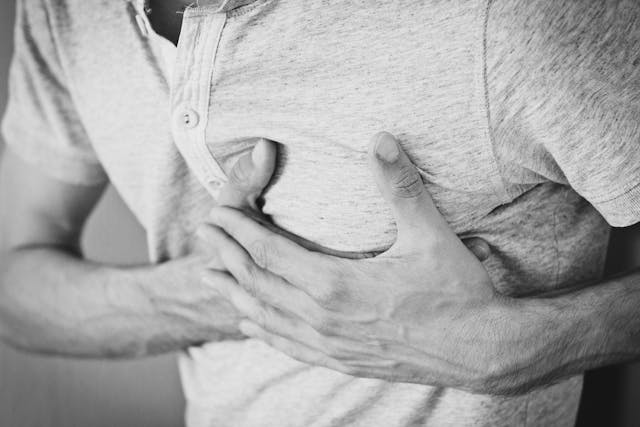
    Your chest feels tight or painful, there are pains in your stomach, you feel your heart palpitating, your head and face hurt, and maybe your neck and shoulders too. These are all too common signs of anxiety kicking in. Anxiety is not just in the head, it is not just about the way we think, it has a physical impact on the body too.

    People experience anxiety in a number of different ways, including real physical symptoms. During moments of high anxiety, there can be painful or uncomfortable feelings in the body as well as things like:

    • Dizziness
    • Hot flashes
    • The shakes
    • Sinus problems
    • Skin problems
    • Loss of appetite
    • Excessive sweating
    • Dry mouth
    • Repetitive body movements (stimming)
    • Blurry vision
    • Nausea
    • Shortness of breath
    • Light headedness
    • Swollen glands

    In fact, this list can be never-ending, as everyone experiences anxiety in a different way. There is no one-size-fits-all set of symptoms for anxiety. Everyone responds in their own unique way.

    And that is why support for people with anxiety should be tuned to their own special needs. Everyone is unique in how the anxiety got there in the first place, and how manifests itself. So, although we use this generic term “anxiety”, support for people to help them get over their anxiety should be as unique as they are.

    Hypnotherapy helps each individual find their own unique solution to their problem. A hypnotherapist will not help everyone in exactly the same way. They will help their client’s subconscious find its unique way of getting the anxiety under control, so that they can return to leading a normal life again.

    Of course, a “normal life” is also unique to each individual person. A hypnotherapist will seek to allow their clients to get back to a life that is normal for them.

    Hypnotherapy is not the only way to overcome anxiety, and of course, just as everyone is unique, so the help they seek should be best suited to them.

    If you want help with your anxiety, and you would like a hypnotherapist to help you, then you may want to consider me. I work out of my clinic in Fleet Hampshire, as well as online. Contact Me if you want to chat about it.


    Photo courtesy of Pexels

  • Feelings of Anxiety? You Are Not Alone

    Feelings of Anxiety? You Are Not Alone

    I used to commute into London every weekday, travelling in on a packed 12-carriage train. I would follow the crowds of people flooding off the train, out into the streets or down into the underground. I would watch the people as they scurried on to their places of work, each one an individual, each one with their own personality, their own goals in life, their own problems too.

    I think back to those days and now wonder: How many of those people suffer from anxiety?

    So I looked up the statistics. A packed 12-carriage train can take about 1750 passengers. Then I checked the rates of anxiety in the UK. And finally, I calculated that on just one of the many trains travelling into London each day:

    • 350 people will have felt anxious most or all of the time in the last two weeks
    • 105 people are suffering from diagnosable generalised anxiety disorder
    • 70 people have had a trauma in their lives sufficient to give them PTSD

    And that is just one one train. I then went on to think of all the other trains travelling into London or any other city in the world, or all the people in my town, or in the country. There are so many people who have anxiety that impacts their lives, so many people whose lives could be changed for the better if only they could get it under control.

    … And they could get their anxiety under control …

    They could work to getting a normal life back again. There are many people who have managed to overcome their anxiety and feel normal again. And yet, so many of them either don’t realise they can do something about it, or they give up at the first hurdle.

    Hypnotherapy is just one of the methods they could use to help them on the path back to normality. It is not the only thing they could use – they could try medication, other forms of talking therapy or there are a lot of things they can do for themselves like improving their diet or doing more exercise.

    You are welcome to explore any of these means of returning your life to normal. However, if you want to give hypnotherapy a try, you can Contact Me and I would be pleased to talk to you about it.

    References

    Anxiety Statistics
    https://www.mind.org.uk/information-support/types-of-mental-health-problems/mental-health-facts-and-statistics/
    https://www.priorygroup.com/mental-health/anxiety-treatment/anxiety-statistics


    Photo by Ingo Joseph on Pexels