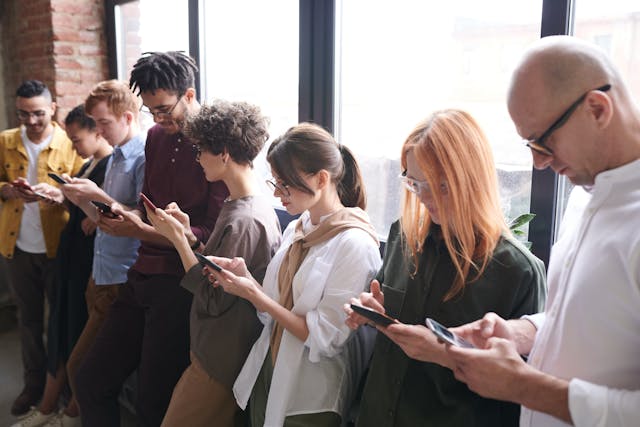
Social media is now part of our society. Research suggests that around 4.9 billion people around the world use social media, spending an average of 145 minutes (that’s nearly two and a half hours) every day. Studies suggest that this may cause an increase in anxiety and depression.
Anxiety, Depression and Social Media
You may wonder how social media can impact our mental health? It starts with the addictive nature of social media. These systems are designed to keep us scrolling. It effects the brain by giving us little hits of dopamine – when we see something we like, when someone likes our post, when someone mentions us … and so on. And the dopamine just encourages us to carry on scrolling, looking for the next hit.
After a while, we need to keep checking our social media just to feel normal, and when we are deprived of it, we feel low – encouraging feelings of anxiety and depression.
The content that we look at on social media can also cause feelings of anxiety and depression. When someone criticises you or your post, or when you are wondering why your post did not get as many likes as you would like – it creates bad feelings.
When you see all the happy smiling faces of your friends, as they post about the highlights of their day, you may wonder why your day has not been 24 hours of delight as your friends appear to have.
All these can lead to feeling bad about yourself. It allows the primitive, anxiety-and-depression-creating part of the brain to take over.
Social Media Isn’t All Bad
Please don’t think that I am saying that social media is a bad thing. It has many positive impacts too. It allows people to express themselves, maintains social contact with friends everywhere as well as being a useful source of information. It’s all about balance.
Social Media Self-Control
When I ask my clients what little thing they could do to improve their lives, one thing that often comes up is controlling the scrolling. They find that too much social media has a negative impact on their lives, so they resolve to cut it down. The common way to do this is to create self-imposed rules about when and where they use social media.
Here are a few self-imposed rules that my clients have decided that they will take on:
- Put the phone down at 8 in the evening – nothing more after that
- No scrolling in bed
- No scrolling while sitting on the toilet
- No looking at the phone until after breakfast
- Put the phone away while watching television
- No looking at social media at meal times
- A social media fast – a month without any social media
You might like to think what self-control rules you might apply.
And Finally …
I always encourage people who talk to me about their anxiety or they mental health in general – find some changes they can do themselves to make it better. Even so, some people still need help.
If you would like my help – I use hypnotherapy to help my clients regain control of their lives. I work in my clinic in Fleet, Hampshire as well as online, so Contact Me if you would like a chat about it.
References
Social media’s impact on our mental health
https://health.ucdavis.edu/blog/cultivating-health/social-medias-impact-our-mental-health-and-tips-to-use-it-safely/2024/05
Impact of social media on social anxiety: A systematic review
https://books.google.co.uk/books?hl=en&lr=&id=pTCRDwAAQBAJ&oi=fnd&pg=PA129&dq=impact+of+social+media+on+anxiety&ots=YpmHilZJMr&sig=G5EGh9TTrSYkiZDpdVbsHt68qk8#v=onepage&q=impact%20of%20social%20media%20on%20anxiety&f=false
Photo courtesy of fauxels on Pexels


